Horā I Parivṛtti Horā (Vāyu)
This is the simplest of the regular horā charts and is based on direct count from Aries for the 24 horā travelling through the zodiac twice. This is a regular division focusing on the second house and the results pertain to “timing health and family affairs” which are some of the important matters ruled by the second house. The regularity of the divisional charts indicates that everything is expected to function normally in life, especially the body and one’s family as these are areas where we often take things for granted.
Parivṛtti Horā Mapping
Let us map the horā of the rāśi into the signs of the D-2P Chart. The first horā of Aries (0°-15°) is mapped into Aries itself. The second horā of Aries, which follows the first, is mapped into the next sign Taurus.
The next rāśi Taurus has its first horā mapped into Gemini while its second horā is mapped into Cancer. In this manner, as we move from one rāśi to another in the rāśi chakra, we are moving at double the speed in the horā chakra covering two signs for every one sign of the rāśi chart.
Table 6: Parivṛtti Horā
|
Rāśi |
1st Horā |
2nd Horā |
Rāśi |
1st Horā |
2nd Horā |
|
Aries |
Aries |
Taurus |
Libra |
Aries |
Taurus |
|
Taurus |
Gemini |
Cancer |
Scorpio |
Gemini |
Cancer |
|
Gemini |
Leo |
Virgo |
Sagittarius |
Leo |
Virgo |
|
Cancer |
Libra |
Scorpio |
Capricorn |
Libra |
Scorpio |
|
Leo |
Sagittarius |
Capricorn |
Aquarius |
Sagittarius |
Capricorn |
|
Virgo |
Aquarius |
Pisces |
Pisces |
Aquarius |
Pisces |
Upadeśa
This horā does not completely obey the Parāśara condition of masculine energy for the first horā of odd signs and feminine energy for the first horā of even signs. For example, the first horā of Aries maps to Aries abiding by the ‘Sun horā’ rule but the first horā of Taurus maps into Gemini which is an odd sign with masculine energy instead of mapping into an even sign as it is meant to be “Moon horā”. However, it does spell out an import social condition that the head of the family, in all societies of the world, is always male dominated. Even in some matrilineal societies, the head of the family is still a male. Therefore this horā is restricted to the study of “family matters”. The other concern in the family is always about health of family members as they eat together and share in the joys and sorrows.
It is evident that this horā has the overall dominance of Vāyu tattva. In the days of yore the Vāyu purāṇa was read in village communities before the families retired for the night. Saturn is the planet indicating vāyu tattva, especially when it is in its own sign or in exaltation. A study of this chart reveals whether the family shall stand united and joint in their joys and sorrow or shall dissipate with the wind. We have also learnt something new – that when it comes to the wind (vāyu) and Saturn the movement is always zodiacal and regular without jumps, spurts, reversals or any changes of any kind.

Vasudaiva Kuṭumbakkaṁ
The entire world is a family of God; all creatures big and small are His children; they must learn to live in harmony without hurting one another. Dharma has four legs – (1) the highest is the dharma towards the world, (2) dharma towards the country, state or city, (3) dharma towards one’s family (including extended family) and finally (4) dharma towards oneself (including spouse who is considered the better half). Viṣṇu upholds dharma through the four kendra and these are termed as Viṣṇu sthāna by Parāśara. The strength of these houses is based on the dharma rules.
- 10th house is strongest – shows dharma to world
- 7th house is next in strength – shows dharma to nation, region or city
- 4th house is the third in strength – shows dharma to family (broad definition)
- Lagna is the last – shows dharma towards oneself (and spouse)
The “world view” of a person is studied from the ninth house and so is his dharma known for each of these legs or aspects of dharma. For example, the 10th house shows dharma towards say, mankind and from the 9th house reckoned from this 10th bhāva, which is the 6th bhāva, we know how this dharma shall manifest. The purity of intent and everything else is known. In principle we are to examine the concerned kendra as well as the ninth house from it to understand the manifestation of dharma.
- The 2nd house is the focus as everything about family revolves around this house. Moon signifies the family itself and important “inner members”.
- From Jupiter we see the patrilineal family while from Venus we know the matrilineal family. Similarly study the planets and “houses from them” to know their significations. For example, study the 5th from Jupiter to know how well the children integrate into the family.
- If the 2nd lord is strong in a kendra then the native shall have a large strong family. If it associates with the ātmakāraka, then he shall believe in this “one world family” concept of Vasudaiva Kuṭumbakkaṁ.
- Nārāyaṇa daśā reckoned from the sign occupied by the 2nd lord of the rāśi chart, in the D-2P Chart clearly brings out the stresses in the family. Carefully examine the 2nf lord of the rāśi chart in the D-2P Chart. It shows the attitude towards family matters and the extent to which one will really strive to fulfill the Vasudaiva Kuṭumbakkaṁ ideal.
- Again, this is one of those charts where the Rāhu and Ketu are together showing that it can bring about karma which leads to mokṣa (or death!).
Keeping this important lesson of sanātana dharma in mind, let us examine the D-2P Charts of some well-known people.
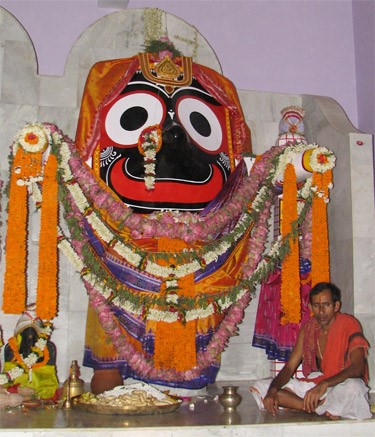
Śrī Jagannāth Kṛṣṇa

In the rāśi chart Mercury is the lord of the second house. It is placed in Aquarius in the 8th house showing some sort of separation from family at birth. However, Mercury conjoins the lord of the 9th house and Jupiter showing that His dharma would be closely intertwined with the Vasudaiva Kuṭumbakkaṁ. In fact this very concept comes from Vāsudeva (Kṛṣṇa). Normally the placement of the lord of the 9th bhāva in the 8th house is considered very inauspicious. However the only exception being for Aries and Cancer lagna where the 9th lord is Jupiter and its placement in the 8th house shows strong attachment to Lord Śiva. This is the Bhagavat Gita yoga we have spoken of previously (Jupiter + Mercury = establishment of the Guru-śiṣya paraṁparā). His dharma is clearly spelt out in the Bhagavat Gita, which becomes the fountain head of vedānta.
Nārāyaṇa daśā will start from this sign Aquarius which houses Mercury, the lord of 2nd house of rāśi chart. This is the 8th house showing foster care and Śrī Kṛṣṇa was brought up by foster mother Yaśodā instead of his own mother Devakī. The place where the family is stationed is seen in the 4th sign from Mercury which is Taurus indicating cowherds. Kṛṣṇa was in the house of Nanda, the head of Gokula, a village of cowherds in the plains near Vrindavan.
Nārāyaṇa Daśā of D-2 (Pv) chart
| Daśā | From | To | Years | Age | Daśā | From | To | Years | Age |
| Aq | 3228 | 3224 | 4 | 4 | Aq | 3157 | 3149 | 8 | 79 |
| Cn | 3224 | 3212 | 12 | 16 | Cn | 3149 | 3149 | 0 | 79 |
| Sg | 3212 | 3210 | 2 | 18 | Sg | 3149 | 3139 | 10 | 89 |
| Ta | 3210 | 3204 | 6 | 24 | Ta | 3139 | 3133 | 6 | 95 |
| Li | 3204 | 3203 | 1 | 25 | Li | 3133 | 3122 | 11 | 106 |
| Pi | 3203 | 3202 | 1 | 26 | Pi | 3122 | 3111 | 11 | 117 |
| Le | 3202 | 3195 | 7 | 33 | Le | 3111 | 3106 | 5 | 122 |
| Cp | 3195 | 3189 | 6 | 39 | Cp | 3106 | 3100 | 6 | 128 |
| Ge | 3189 | 3181 | 8 | 47 | |||||
| Sc | 3181 | 3170 | 11 | 58 | |||||
| Ar | 3170 | 3164 | 6 | 64 | |||||
| Vi | 3164 | 3157 | 7 | 71 |
Examine Kendra
7th lord Saturn is in lagna with the lagneśa Moon. Whenever we have lagneśa in 7th house or vice-versa, a special situation arises in which the native will become selfless and uphold the dharma of the 7th house which is dedication to his nation, country or region and give it a priority above that of his own self. This generally shows someone who is spiritually advanced.
We have a similar situation with the 10th lord in the 4th house (which is like 7th lord in lagna reckoned from 4th house). Mars aspects the 10th house Aries indicating that Kṛṣṇa will fight to uphold the high dharma of protecting the world even if it meant sacrificing his own family, kith and kin.
Piśāca yoga is present in the 4th house with Mars conjoining Ketu and Rāhu indicating that during the first Nārāyaṇa daśā itself He will be attacked by demons of all kinds as this sign is in the 9th house (protection) from the daśā rāśi (Aquarius). In this battle, the power of the Bhagavat Gita (Jupiter and Mercury) shall demolish the evil snakes like Kalia and Putana, Sakata-asura, Trinivarta demons indicated by the three terrible malefics Mars, Ketu and Rāhu.
However, the fact remains that the 4th house of extended family has the “war yoga” of Mars and Rāhu and the “piśāca yoga” of Mars and Ketu. This shows that inspite of his every effort (Jupiter aspects the yoga), the war cannot be averted. This evil combination is in Libra and aspects Aquarius, Taurus and Leo by rāśi dṛṣṭi. Of the aspected signs Aquarius is protected by Jupiter and Mercury but Taurus is the bādhaka sthāna and its lord is in Scorpio involved in a parivartana rājayoga between Mars, Ketu on the one hand and Venus in the other. This is a rājayoga for Kṛṣṇa and all those who shall have Kṛṣṇa through “Venus” (Bhakti, Love, charioteer etc.) but indicates terrible devastation in Taurus and some devastation in Leo as well.
Taurus Nārāyaṇa daśā was from 3139-3133 BC when Kṛṣṇa was 89-95 years of age. World War Zero called “Mahabharata” between the members of his extended family – the Pāṇḍava and Kaurava cousins, and which dragged all the kings and lords into the muddle, was fought in 3138 BC when Kṛṣṇa was 90 years.
Leo Nārāyaṇa Daśā was from 3111 – 3106 BC (117-122 years). This sign is also aspected by the deadly piśāca yoga and yuddha yoga of Mars and Rāhu. Why is the combination of Mars and Rāhu called Yuddha Yoga? Because Mars is the commander-in-chief of the deva army and Rāhu is the commander-in-chief of the rākṣasa army. When these meet, its battle royale, or perhaps battle in heavens. Now, when this Leo Nārāyaṇa daśā started, the Yadava members of Kṛṣṇa’s extended family started feuding each other all the time. They would have drunken brawls. These are signs of piśāca yoga which works havoc and mindless destruction, especially at night. Lord of this sign, the second house is the Sun which is placed in a kendra and is also the ātmakāraka indicating that He shall be the leader of His family and one who will sacrifice much for the welfare of the country and people. This is Śrīmanta yoga caused by the Sun. When the daśā of Capricorn finally set in, Kṛṣṇa was completely disgusted with the state of affairs of Dwarka (kingdom, country, 7th house) and retired to the hilly forests (Aries is in the 4th sign from Capricorn). Hurt by the arrow of Rudra, the hunter, on his ankle, Kṛṣṇa left this world in 3102BC aged 125 years.
Upadeśa
Once again we bring the focus on the kendra bhāva, the Viṣṇu sthāna of the chart which causes life (lotus, kamala yoga) to bloom.
We notice that the signs aspected by nodes are the prime cause of separation from family (Moon) and this battle between the Moon and Rāhu is an ancient one. Yet in this separation lies the clue to renunciation and mokṣa. Attachment is from the Moon, the mind and its emotions.
A positive Mercury associating with the second shows the entire clan being considered as “family” whereas the Moon alone restricts it to just immediate family or the nuclear family. Venus brings in the definition of family as just one’s spouse and children – the real nuclear family created by the native, the procreation process of Venus, and is restrictive and small. In comparison, Moon considers the “blood” as family and takes this one level up to include parents, siblings and their children (immediate cousins). Jupiter is the most expansive and takes the concept to family to the highest level of “one world family” while Saturn brings it down to the more selfish one of “just me”. Consequently Saturn makes one go away from family, become self-absorbed and suffer loneliness as this is anti-social, anti-Moon. The nodes are together in this chart indicating that it is tough to differentiate between disgust and shock of Rāhu and straightforward detachment of Ketu which translates to complete final cutting of the umbilicus which binds one to the mother, family, clan, city and world. The nodes work together in the sense that you need a shock to awaken. This is marked by the hair suddenly greying exposing the forced maturity of the mind and wrinkles under the dry eyes as the soul is awakens and burns the sins. The experiences are not easy and people consult astrologers, spirit callers, psychics and psychiatrists for guidance. Yet none can really guide them for they do not know what ails them from within. All that is being done is a study of the immediate symptom, the problem definition, rather than a study of the root of the problem in the karma of the soul and the weaknesses of the mind.
You have to be different and develop the ability to guide the soul that approaches. You need to study the charts concerned, and there are just too many of them to handle. So in a future date we shall learn praśna that will also tell us what divisional charts we need to focus on at this point of time.