The Maharṣi observed two solstices’ where the length of the day (i.e. daylight duration) was the longest and shortest respectively called the summer and winter solstice[1]. The Summer solstice is the longest day and marked the end of the hot summer season and beginning of the rainy season. So also the winter solstice marked the end of the long nights. Thus, the zodiac was divided into two halves along an imaginary line passing through the Zero Degrees of Cancer and Zero Degrees of Capricorn, which showed the position of the Sun at these two extreme points of longest day and longest night. This formed the two āyana or halves of the zodiac comprising three seasons each. After the winter solstice, the Sun starts its upward journey towards the north (called uttara in Sanskrit). Hence this latitudinal motion is referred to as uttara āyana. Similarly after the summer solstice the Sun begins its declination or downward journey towards the south (called dakṣiṇa in Sanskrit). Hence this journey towards the south is called dakṣiṇa āyana. This can also refer to the goal of seeking the northernmost latitude[2], which coincides with summer solstice, or the southernmost latitude[3], which coincides with winter solstice.
The specific terms used are uttara-āyana or Northern Goal and dakṣiṇa-āyana or Southern-Goal and refers to the ‘goal’ of the Sun as it seeks to reach the northernmost point of the zodiac (i.e. Zero degrees of Cancer) or southern-most point (i.e. zero degrees of Capricorn). Now, the tropical zodiac shows the longest and shortest days but the sidereal zodiac marks the north and south of the universe. Therefore it becomes necessary to translate this north-south goals into the sidereal zodiac. The starting point of Cancer (0° Cn) marks the northern-most point of the sidereal zodiac while the start of Capricorn (0° Cp) marks the southern-most point of the zodiac.
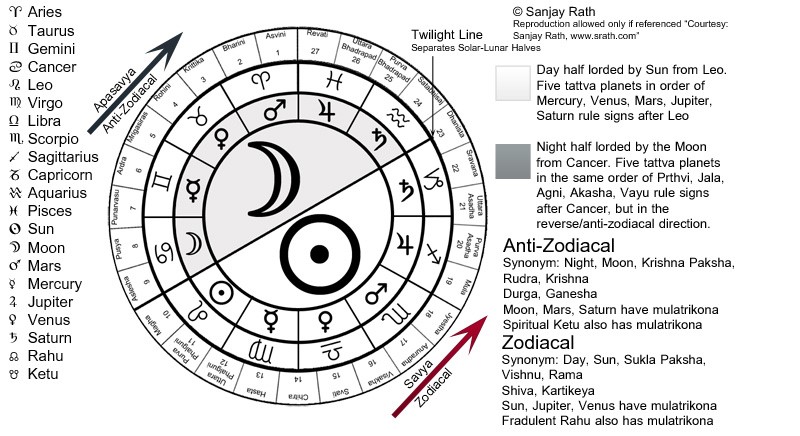
The imaginary line passing through these points is like a polar axis that divides the zodiac. The first Eastern hemisphere is the area of “increasing daylight” when the Sun passes from 0°Cp to 0°Cn as it travels through Cp, Aq, Pi, Ar, Ta and Ge. Then the Sun starts moving southward starting at 0°Cn to 0°Cp as it travels through Cn, Le, Vi, Li, Sc and Sg which is the period of “decreasing daylight”.

Analogy
The period of “increasing daylight” or uttara āyana is like śukla pakṣa of the year and is therefore the “day of the deva”. The total period of daylight during this period surpasses the total period of darkness making the devas stronger than the rākṣasa. Since this half is like śukla pakṣa, we say that uttara āyana is ruled by the Moon.
The period of “decreasing daylight” is like kṛṣṇa pakṣa of the year and is therefore “the night of the deva”. The total period of daylight during this period is much lower the total period of darkness making the rākṣasa stronger than the deva. Since this half is like kṛṣṇa pakṣa, we say that dakṣiṇa āyana is ruled by the Sun.
The devas awaken in strength during uttara āyana starting with Gaṅgā (Devī) in Capricorn, Śiva in Aquarius and Viṣṇu in Pisces etc. Similarly Viṣṇu sleeps when Sun is in Cancer and so on.
During uttara āyana it is important to worship the devas with ‘Svāhā’ for prosperity and well-being whereas during the dakṣiṇa āyana it is advisable to worship the pitṛs with “Svadhā” for protection from the rākṣasa.
Savya chakra
This āyana-horā chakra is based on the motion of the Sun and the daylight and is always direct or zodiacal. Dakṣiṇa-āyana follows Uttara-āyana just as night-time follows the day-time or kṛṣṇa-pakṣa follows the śukla-pakṣa.
Use of Āyana Horā
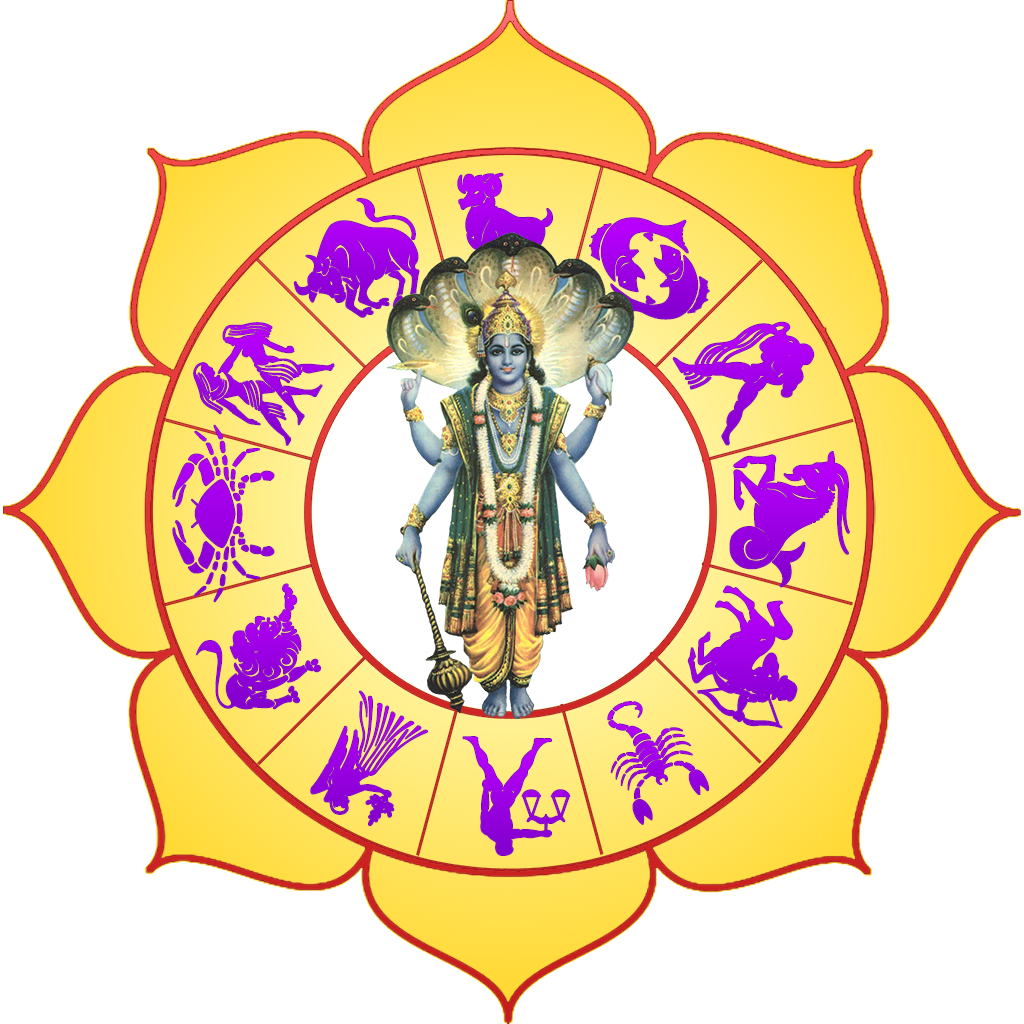
The āyana horā is attributed to (1) the changes in the seasons and (2) to the Lord Nārāyaṇa (Viṣṇu).
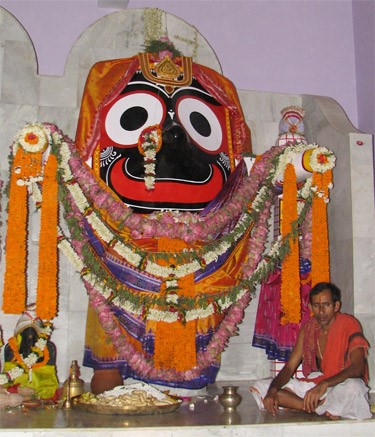
Śrī Nārāyaṇa and eternal rest: Note the name nār (water) + āyana (resting, lying in) = Nārāyaṇa refers to the resting of Nārāyaṇa on the cosmic ocean symbolised by the sign Cancer. In fact the date Śrāvaṇa kṛṣṇa tritīya is called Viṣṇu sāyana (sleeping date of Viṣṇu) when the lord takes the posture as Nārāyaṇa. Śrāvaṇa is the month when the Sun is in Cancer, the start of the dakṣiṇa āyana and the sleeping or resting time of the devas who will follow Viṣṇu as the Lord retires. We all must die one day and it is believed that death during the śukla pakṣa of the devas (uttara āyana) leads to the higher lokas immediately. Else there is a wait in the tala if death is during dakṣiṇa āyana as then the devas are resting and the passing souls need to wait for them to awaken to carry them to the lokas. The mantra “om tat sat viṣṇave namaḥ” is for being carried to the highest satya loka after death. This is the single most important use of this horā and the āyana-horā is associated with Nārāyaṇa.
 We have learnt of the six seasons where every two signs reckoned from Capricorn gives two vedic seasons. Thus the āyana line from Capricorn to Cancer shows six seasons in the uttara āyana including
- śiśira (cold), comprising Capricorn and Aquarius | Saturn significator
- vasanta (spring), comprising Pisces and Aries | Venus significator
- grīṣma (summer), comprising Taurus and Gemini | Mars significator
Similarly there are six seasons in the dakṣiṇa āyana –
- varṣā (rain) comprising Cancer and Leo | Moon significator
- śarad (fall) comprising Virgo and Libra | Mercury significator
- hemanta (winter) comprising Scorpio and Sagittarius | Jupiter significator
From the āyana perspective it is best to start something in dakṣiṇa āyana and end it during uttara āyana. Life is best started in dakṣiṇa āyana and ended in uttara āyana, but this is not in our control. However there are so many things in life where we can make choices and should prefer starting in dakṣiṇa āyana and ending in uttara āyana. The season in which the ending happens shows the weakness in the yoga for continuation (sustenance). For example if something ends in vasanta ṛtu, then the planet that was weak in the yoga is Venus, the significator of vasanta ṛtu implying a lack of desire to continue. If the malefic Mars, Saturn or Venus show the end of life then this is considered good whereas if the Moon (varṣā), Mercury (śarad) or Jupiter (hemanta) show the passing, it is not considered good.
There must be a horā chakra based on this āyana movement of the Sun, which divides the zodiac along the N-S poles forming the “eastern” and “western” blocks of uttara-āyana and dakṣiṇa āyana. It is important in that it is celebrated annually as makara saṅkrānti in India (also called Pongal etc.)
Sambandha (Relationships)
In the previous lessons Parāśara teaches the relationship between planets which is composed of two parts (a) Naisargika – natural relationships and (b) Tatkālika – temporal relationships based on planet positions in the chart
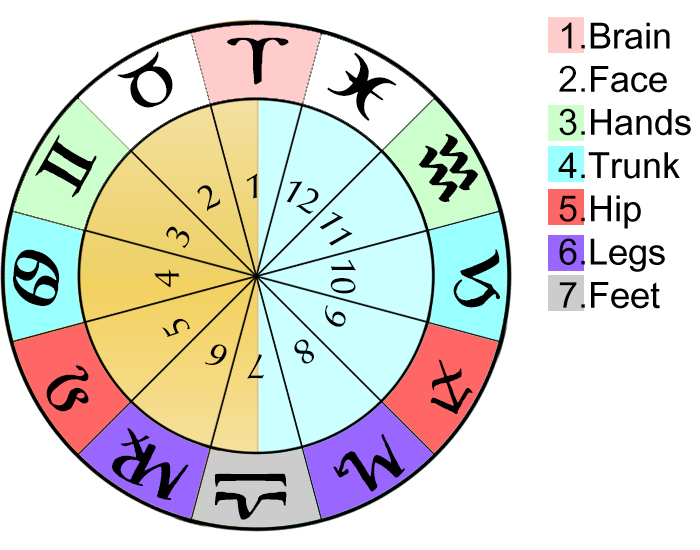
The horoscope is divided into two parts called Internal and External based on the houses from 10th to 4th (via Lagna) which are internal, and the rest are external. The lagna also joins the external as it shows how excessive familiarity breeds contempt and shows how some people become very close and then get ejected from one’s life. Thus the six houses 10th, 11th, 12th, 2nd, 3rd and 4th are internal houses while the houses 5th, 6th, 7th, 8th, 9th and Lagna become external. Planets in internal houses have ways to become close and friendly while planets in external houses tend to go away.
Treating every planet as a separate lagna, we can know which other planets are becoming friendly and maintaining harmonious relationships while which other are moving away from it and taking conflict positions.
Illustration: Rajiv Gandhi and V.P.Singh
Rajiv Gandhi was born in Leo lagna with a host of planets in lagna forming multiple rājayoga and maharaja yoga. While there is every reason to get excited about the power of this chart, the danger lies in what take for granted and tend to ignore as ‘assumed natural benefics’ particularly Moon and Mercury who can become very malefic given adverse conditions of low light in the Moon or affliction to Mercury. In this case all the rājayoga in lagna has an affliction coming from the Moon which is not only the 12th lord but is also the dispositor of Rāhu (Rāhu-pati) thereby bringing in the most diabolical problems in the chart.

Since the planet is in lagna which is in the eastern half from 10th house cusp to 4th house cusp via lagna, or Moon āyana-horā, the native will become a very close ally and strong supporter. However, the Moon is malefic as it is without pakṣa bala (śukla dvitīya tithi). It is placed in lagna which shows tatkālika śatru (temporal enemy). Therefore people indicated by the Moon will be initial very good and dear as they will come to lagna, but will become deadly secret enemies.
It is important that we use the divisional charts properly to identify the people who will back stab him as Moon is lord of 12th house of secret enemy instead of foolishly pointing a finger at every ‘Cancer lagna’ or ‘Moon in Lagna’ person. Let us start with the dasāṁśa D10, which is the chart related to work/profession. Moon is the lord of the 8th house (Sagittarius Lagna) and is placed in the 2nd house indicating someone associated with his finance or money matters; someone who he trusted completely. This was his close associate from Allahabad, the Raja of Manda, Vishwanath Pratap Singh.
V.P.Singh was believed to have been a very close confidante of Rajiv Gandhi – an enemy of the power brokers Rajiv wanted to be rid of. He was born in Cancer lagna with exalted Jupiter and Moon in the 4th house in digbala confirming the power of the haṁsa mahāpuruṣa yoga. V.P Singh was a loyal soldier of the Congress under Indira Gandhi as well and a proven old-timer. This is the Moon showing the connection through the mother as well. When Rajiv Gandhi became prime minister, V.P. Singh was given the finance portfolio. Together, the Sun of Rajiv Gandhi and the Moon of V.P. Singh embarked on the greatest process of opening the economy and structural reforms which required the guts of the lion (Rajiv) and the smartness of the Moon (VPS).
But the industrialists and the moneyed who had thrived under the license-permit regime drove Rajiv to believe that V.P. Singh was working against his interests. He was perceived as going after the bad guys and that was to destroy the very base of Rajiv Gandhi’s image. Rajiv Gandhi took a holiday in the Andamans, where Amitabh Bachchan (Aquarius lagna, Saturn) paid a visit. Nothing is known about what happened at the Andamans, but on his return from the holiday, V.P. Singh lost his finance portfolio and his great dream of being a part of the structural reform and was shifted to the Ministry of Defence (MOD). From jyotiṣa we can see how the aspect of Rāhu and Saturn (lords of Aquarius) are having terrible special dṛṣṭi on the Sun and Moon in lagna destroying 30 years of friendship between V.P.Singh and Nehru-Gandhi family. All these twists were happening during Rāhu daśā Saturn antardaśā. The timing is just perfect and jyotiṣa tells us who is to blame for this fiasco – its Rāhu + Saturn = Aquarius.
Let me put the record straight … I want to make it clear that at no point of time did I make the charge that Rajiv personally took money in the Bofors affair… V.P.Singh admits
What do you think would happen if the Moon is shifted to the house of Mars? Imagine its debility and anger. Therefore, when V.P Singh joined MOD, what emerged were the skeletons of Bofors and HDW submarines making it difficult for Rajiv Gandhi to consolidate his position as Prime Minister. VP Singh was ousted completely, had to leave his ministry and was later expelled from the Congress as well. He had already started talking about the ‘Bofors scam’ and twisted his words so cleverly that people believed that Rajiv Gandhi had personally received kickbacks and was corrupt. In the same daśā-antara of Rāhu-Saturn, Rajiv Gandhi was ousted from power and V.P Singh became the Prime Minister riding the ‘greatest lie’ to the nation.Later V.P Singh admitted “Let me put the record straight … I want to make it clear that at no point of time did I make the charge that Rajiv personally took money in the Bofors affair.” Yet even when under such a terrible negative wave, Rajiv Gandhi still had the single largest party in the Parliament but preferred to sit in the opposition rather than do any horse-trades with side-kicks and somehow come grab power. This shows the character of the lion. Broken by the backstabbing of trusted ones and manipulated by friends, the lion of India finally fell to the bomb of terrorists.