Parāśara ṣoḍaśavargādhyāyaḥ śloka 6½
मेषादि तासां होराणां परिवृत्तिद्वयं भवेत्॥ ६॥
rāśerarddhaṁ bhaveddhorā tāścaturviṁśatiḥ smṛtā |
meṣādi tāsāṁ horāṇāṁ parivṛttidvayaṁ bhavet || 6||
Translation: Half the rāśi (sign, 30°) is horā (15°), of which there are 24 (twenty four) in the zodiac. The horā are reckoned from meṣa (Aries) in the two-fold (dvayaṁ) parivṛtti method.
Commentary
Since there are two horā of 15° in each sign, it is easy to know that there are 24 horā (12×2) in 12 signs. How are these horā mapped into other signs in the “horā chart” is known from the Parāśara upadeśa “parivṛtti-dvaya”. Dvayaṁ means “2” and can refer to –
- the consideration of the horā in pairs where two horā are considered together in such a manner that 24 horā will map systematically into the 12 signs of a special chart called “horā chakra” and/or
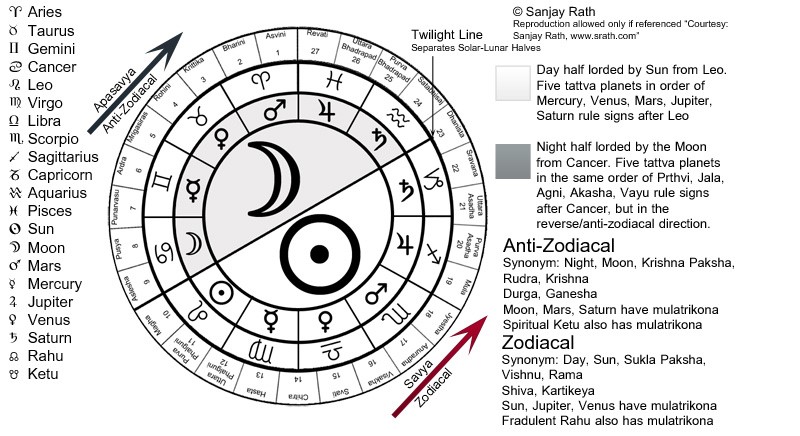
- division of the zodiac into two parts where each of the parts has a direct reference to (i) Sun and Moon or (ii) to the Pitṛs and Devas, or (iii) day and night etc.
Pari
The word परि (pari) refers to
- A circle or round and implies going around it. In this context it is the 360° zodiac and Parāśara is advising us to consider the entire zodiac in such a manner that the horā go around it.
- To go round about fully, completely without ignoring anything. It is an expression of fullness or perfect match where the 24 horā shall map into the signs of the zodiac in a systematic manner.
- About a cyclic motion or coverage in space and time.
At this stage we are only studying the space divisions where the complete zodiac circle of 360° is being divided uniformly and fully and not time divisions. In this case we are ensuring that the space divisions are uniform and are ignoring the time divisions.
In time divisions, the zodiac is seen as a cyclic time of 24 hours and this is divided uniformly into the divisions. Since the motion of the lagna is not uniform through the signs, this can cause some space distortions and we may have non-uniform divisions in space which are uniform in time.
For example, there are 24 hours in a day which equates to the 360° of the zodiac. If we take one hour of time to be equal to one horā, then in two hours (horā) it is possible that the lagna may have moved by an amount which is less than 30° (when it is in the Virgo-Libra side) or more than 30° when it is in the Pisces-Aries side of the zodiac. This can complicate the construction of the divisional charts and their mapping into signs. Therefore we stick to the simpler straight spatial division of the zodiac where every horā is of 15° and there are two horā in every zodiac sign.
Vṛtti
The word वृत्ति (vṛtti) means
- rolling as in the rolling down of tears or water, and in the present context the rolling of the signs in the zodiacal (savya) or anti-zodiacal (apasavya) fashion. It implies a sequential count of signs from the head (Aries) to the feet (Pisces).
- It is important to note that whenever the Sanskrit classical literature talk of vṛtti, they always refer to “five types” and this can be five modes of being, nature, kind, character, disposition or anything else depending on the context.
Example: Chitta vṛtti refers to the cause of mental activity which leads to moods and thoughts in the mind. The five ingredients of chitta vṛtti (manas) which are also taught in the yoga sutra by Maharṣi Pātāñjali are –
- Smṛti (Memory): Ruled by Jupiter, it stores everything from the past which leads to growth of the mind. Without memory we cannot recall names, words, sounds, smells, taste, emotions etc. And without the ability to recall these we can neither understand nor will.
- Nidrā (Sleep): Ruled by Saturn it shows the part of the mind which sleeps or is unaware due to fatigue, boredom etc. There is always a part of us which is asleep. When this factor dominates the chitta we actually are seen as sleeping. Even in a class when something is taught, if the mind is already tired deciphering many images, it shall tend to become vacant and asleep.
- Vikalpa (Imagine, Fantasize): Ruled by Mercury, this is the childishness in the mind. Full of fantasies, vivid imaginations and dreams, it refers to things or beings which may or may not exist in the manifested or known world and yet occupy a major part of the mind, even if seeming completely irrelevant.
- Viparyaya (Illusion, Contradiction): Ruled by Mars, this is the partial knowledge where we jump to conclusions or become judgmental without adequate consideration and knowledge. A good example is mistaking a snake for a rope in poor light.
- Pramāṇa (Proof, Correct): Ruled by Venus, it is the search that leads to the truth or proof of correctness in three different ways –
(i) “Direct Experience” where the senses can see, touch or experience something which serves as the proof,
(ii) “Hypothesis” which is ascertained through the use of memory and wisdom which stems from wisdom, is the proof of correct knowledge, and
(iii) “Hearsay” which is proof ascertained by listening t the words of another who is more information or more knowledge about the subject. A typical example is the words of the seers like Maharṣi Parāśara in BPHS where we take every word to be the jyotiṣa pramāṇa (proof of vedic astrology).
Example, in poetry, vṛtti means alliteration where repetition of the same consonant is done in five ways – madhurā, prauḍhā, puruṣā, lalitā, and bhadrā.
Conclusion: Therefore, when Maharṣi Parāśara uses the word “parivṛtti” there must be five types, and in this context horā charts. These horā charts are definitely different form the simplistic SM (Sun-Moon two-sign) Horā chart we have studied in the previous lessons.
Vṛtti-dvaya
Vṛtta-pāda definition: An arc of a circle which subtends an angle of 90° at the center is called a vṛtta-pāda (a quadrat of a circle). The word pāda generally refers to the number four “4” referring to the four feet in creatures and nakṣatra. Now the zodiac of 360° when divided by four (pāda) gives an arc of 90° (right-angle) called “kendra”.
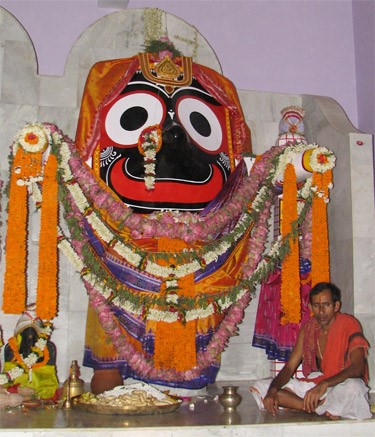
In a similar manner when we use the word “vṛtti-dvaya” we are required to divide the zodiac into two parts of 180° each. There are three ways in which this bifurcation of the zodiac is achieved –
1) Ayana: Nārāyaṇa: Based on solstices projected back to sidereal from tropical; Abhijit nakṣatra
2) Golā: Brahma: Based on equinoxes, length of day and night; projected back from tropical to sidereal;
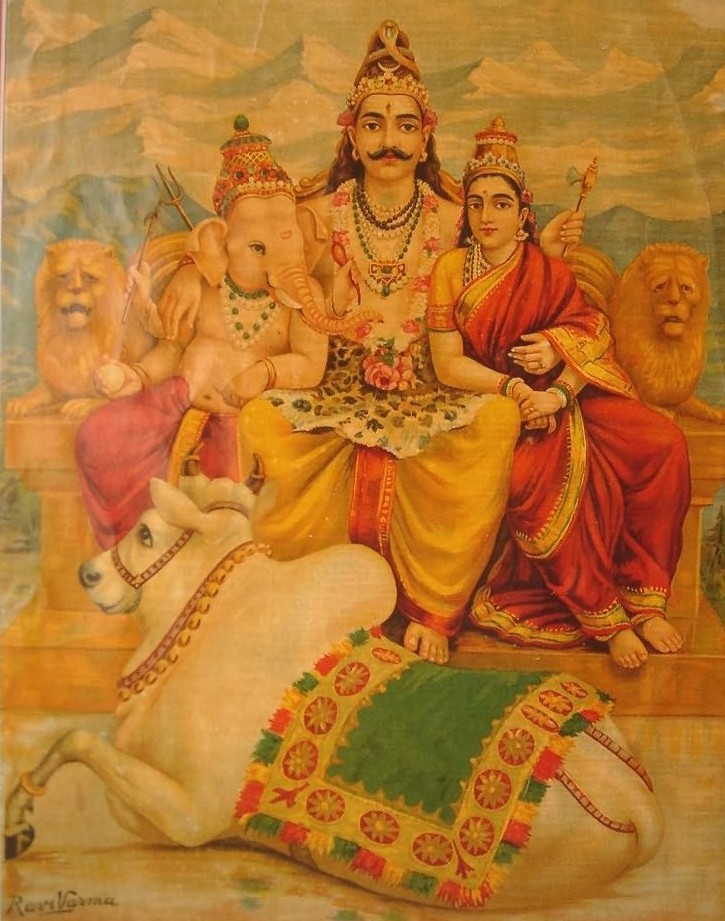
3) Aho-Rātra: Śiva-Gaurī: Based on ecliptic and guṇa;
The Count
There are a number of ways in which the count for the purpose of mapping the horā is done. According to the requirements of parivṛtti, this is either
(a) regular for all signs or
(b) savya (zodiacal) for odd signs and apasavya (anti-zodiacal) for even signs
However, there are a number of peculiar constructions based on the definition of this regularity, and we shall examine some of them in due course keeping in view the strict definitions of the word – parivṛtti dvayaṁ. Also we must bear in mind that the Maharṣi refers to five principal types of horā charts other than the simple Sun-Moon horā.