Etymology
 The Sanskrit word क्षेत्र (kṣetra) means
- landed property, land, soil as in kṣetrasya-pati[1] meaning “lord of the land” and can refer to a kind of tutelary deity protecting the land. This can also be feminine as in kṣetrasya-patnī meaning “mistress of the soil” where the protector is feminine. Another reference is as kṣetrāṇām-pati also meaning the same as kṣetrasya-pati
- place, region (geographical or cultural) or country
- Spatial definitions include a house or a town while it also means a department or a sphere of action[2]
- place of origin (of someone) or a place where anything is found (like the origin of something)
- a sacred spot or district; place of pilgrimage (Benares as Kāśi-kṣetra or Puri as Śrī-Kṣetra)
- a planetary orbit [Gaṇita]
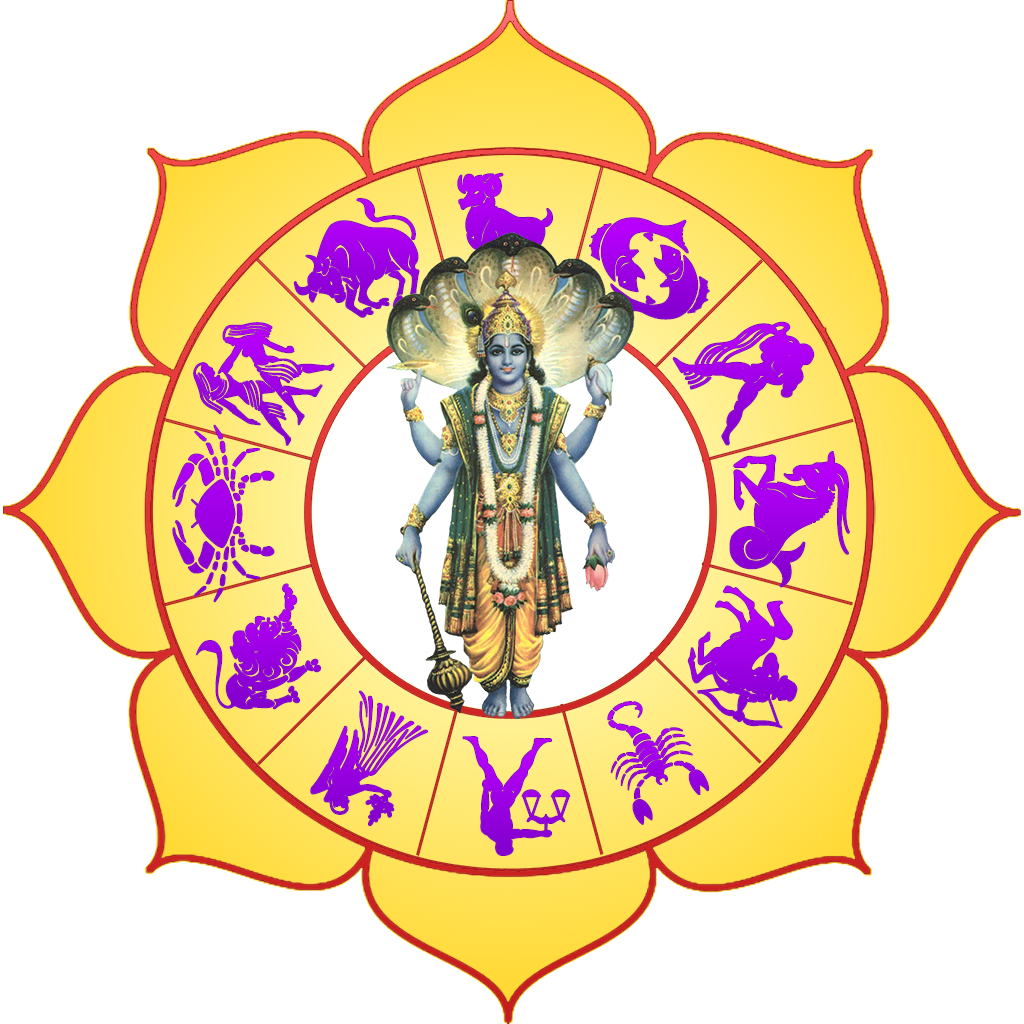
- a zodiacal sign [Sūrya Siddhānta]
- an astrological mansion [Varāhamihira – Bṛhat Saṁhitā]
[1] Atharva Veda. ii , 8 , 5
[2] Mahabharata xiv , 126
 Rāśi – Kṣetra
Rāśi is the Vedic sign having a span of 30°. The derivation of the rāśi is based on the period of time intervening between two consecutive conjunctions of the Sun and Moon (amāvāsya) or alternatively the time taken between two full Moons (pūrṇimā). This period of time is thirty (30) tithī which defines the soli-lunar month, where each tithī measures an angular separation of 12° between the luminaries. In thirty tithi the angular separation is 360° (30°×12=360°) resulting in their conjunction or opposition. This defines the period of a month (māsa). During these 30 days the Sun has moved ahead by 30° thereby traversing ‘one rāśi’ (considering an average motion of 1° per day for the Sun). In this manner, starting with the point at 0° Aries, the Sun marks out 12 vedic signs called rāśi. Being the creator of the signs the Sun becomes the creator of everything and these 12 signs represent everything that is formed in this universe. Hence the meaning of rāśi is a measure or weight and the first measurement is that of angular space itself by 30°. In the process of cutting out or demarcating these spaces the Sun has actually destroyed the 360° whole zodiac and cut it into 12 rāśi. Simultaneous the Year of 360 days is divided into 12 months of 30 days each.
 Sign Lordships
We have already learnt how the Sun (King) sits in Leo and the Moon (Queen) sits to his left in Cancer. An imaginary line passing through the Cancer-Leo border is called gaṇḍānta showing the first demarcation between the fire of the Sun and the water of the Moon. This line extends further to divide Capricorn and Aquarius with Capricorn being in the Sun-half and Aquarius being in the Moon half. These halves are called horā.
A court needs to be established and this job is given to Jupiter who is the natural significator of the month[1] as each rāśi is a month in time. This order of lordship or governance of kṣetra was given to the graha.
The five planets (pañca graha) in the order of their speeds are Mercury, Venus, Mars, Jupiter and Saturn who will, in that order, rule the signs from Virgo to Capricorn and then in the reverse from Aquarius to Gemini. Thus Mercury, the price shall lord the lands of Virgo and Gemini adjoining those of the king (Sun-Leo) and queen (Moon-Cancer). Similarly, we have derived the other lordships in the previous years.
[1]Planets rule time periods of the year. Saturn being the slowest rules the year; Sun rules the half-year or 6 months; Mercury rules the season (ṛtu) which is 2 months; Jupiter rules the month (māsa); Venus rules the fortnight (pakṣa) which is of 15 days; Mars rules the week (saptāha) of 7 days; Moon rules the present which translates to immediate or a day. The nodes also get to control portions of time with Ketu indicating the quarter (3 months) and Rāhu showing 8 months.
 Kṣatriya Graha
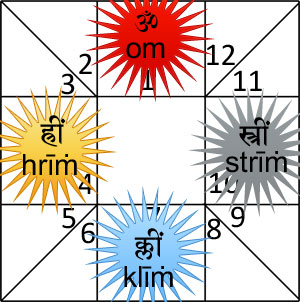
When they function as governors of kṣetra, they shall be obeying the dharma as applicable for kṣatriya (governing class) and their righteous shine shall depend on their kṣatra-tejas. Note the words – kṣatriya, kṣatra and kṣetra – all starting with kṣa (क्ष). This is the Narasiṁha bīja we learnt in the first year and this is the sādhanā we did when we learnt about the rāśi and bhāva.
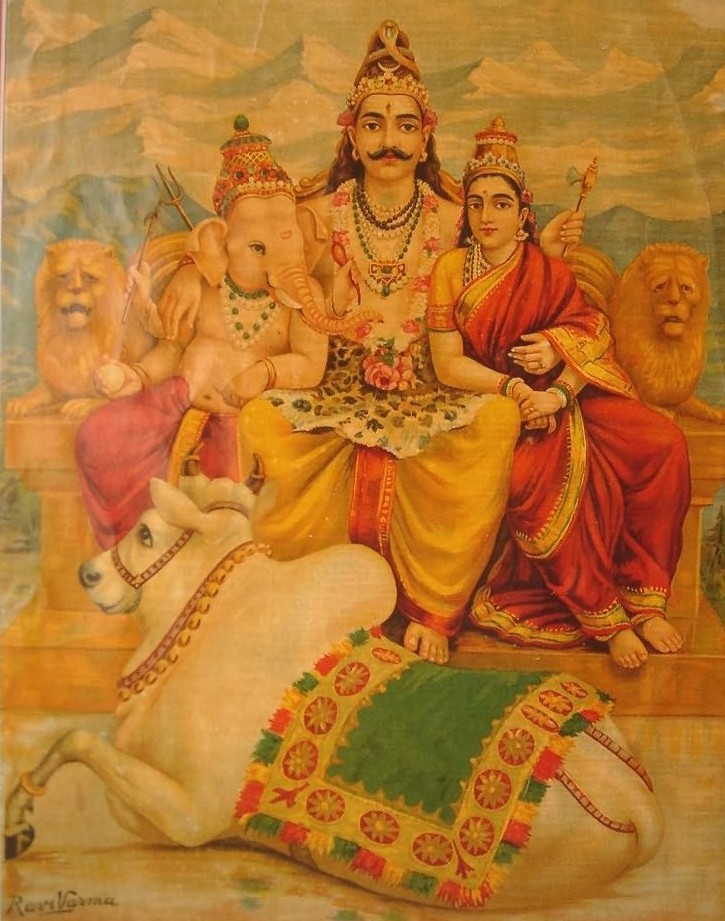
Planets as he lords of the houses behave like kṣatriya, with their primary objective being to fight for and protect the region (house) they govern. The rāśi chart, so peacefully created by the dance between Śiva (Sun) and Pārvatī (Moon) is now converted into a battle ground with planets vying for power and control. This is the effect of time, called kāla which comes into play as soon as we have a lagna that creates the houses and assigns roles to the signs. At this time, due to the coming of the lagna and the play of time, the harmless, karma free rāśi chakra converts into ‘karma-kṣetra’ which is also translated as ‘kuru-kṣetra’.
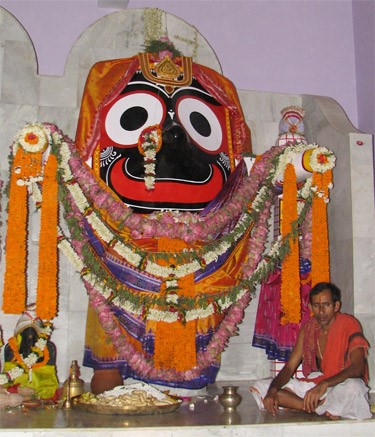
You can see how carefully Parāśara has chosen the word to emphasize on the importance of the time factor (kāla) which makes the static ‘rāśi’ into dynamic ‘kṣetra’ bubbling with life and activity. Among all creatures on the planet the human being (man) is said to be the dominant one as he is made in ‘the image of god’. All religions of the world mostly believe in this. The word for this is puruṣa (पुरुष). Bring the two together and we have the cosmic dynamic chart called ‘kāla-puruṣa’ which is the chart of the living god of the universe. This is Jagannāth! This is the manifested form of God as viewed from the center of the earth – a geocentric (human) view.

“Strength is life, weakness is death” – Swami Vivekananda
Kṣetra chakra is the bhāva chakra where the lordships of the bhāva is based on the lordship of the sign which houses the bhāva-madhya (mid-point of the bhāva). The bhāva lords must behave like the kāraka they are supposed to represent. Some of them do a good job of this while others can make quite a mess. If the bhāveśa is friendly to the kāraka, good follows. If not then separation influences come in and disturbances and destructions happen.
The function of the ‘Kṣetra Chakra’ is one of preservation or dissolution primarily – Viṣṇu or Rudra. There are some rules for this.
- The lords of the bhāva have to function like the kāraka (significators) and carry forward the interests of the bhāva.
- If the lord is strong it promotes the bhāva while a weak lord indicates that the bhāva shall suffer. Strength of lords and bhāva are measured by ṣaḍbala, the six-fold essential quality of planets and houses.
- If a bhāva lord is placed in kendra or koṇa from the bhāva, it promotes the interest of the bhāva, else it struggles to protect the bhāva from annihilation.
- If instead, it is placed in a kendra or koṇa from lagna then it attains significance in the life of the native. Those bhāva lords that are stationed in kendra shall provide strong support during the life of the native like Viṣṇu, the preserver. Those bhāva lords that are stationed in koṇa shall provide strong resource support like Lakṣmī, the constant consort of Viṣṇu. However, malefic planets placed in kendra or koṇa can also make the life full of suffering although their bhāva shall provide the needful support. For example, if the lord of the 7th bhāva is in kendra, then the native is blessed by a most dutiful spouse. However, if this planet is a malefic, then there is constant bickering and mental peace is disturbed. Yet the relationship continues.
- All that we have learnt about bhāveśa results apply to the kṣetra. In addition, the dispositors of bhāva lords are of considerable importance as they have the power to either supplement the results promised by the bhāveśa or block it. Study of dispositors is a must if the bhāva results are to be deciphered correctly. These dispositors and significators is called ‘nitya-anitya kāraka’.
There are various other ways in which the results of the bhāva are altered. These include argalā, āruḍha, dṛṣṭi etc. We have studied dṛṣṭi in PJC Year-1. The dṛṣṭi of planets plays a crucial role in their power to influence results and showing their desires. All planets aspect almost all houses by graha dṛṣṭi – either full 4 pada or lesser. These must be considered. Rāśi dṛṣṭi is their constant relationship which cannot be altered.
 Posture
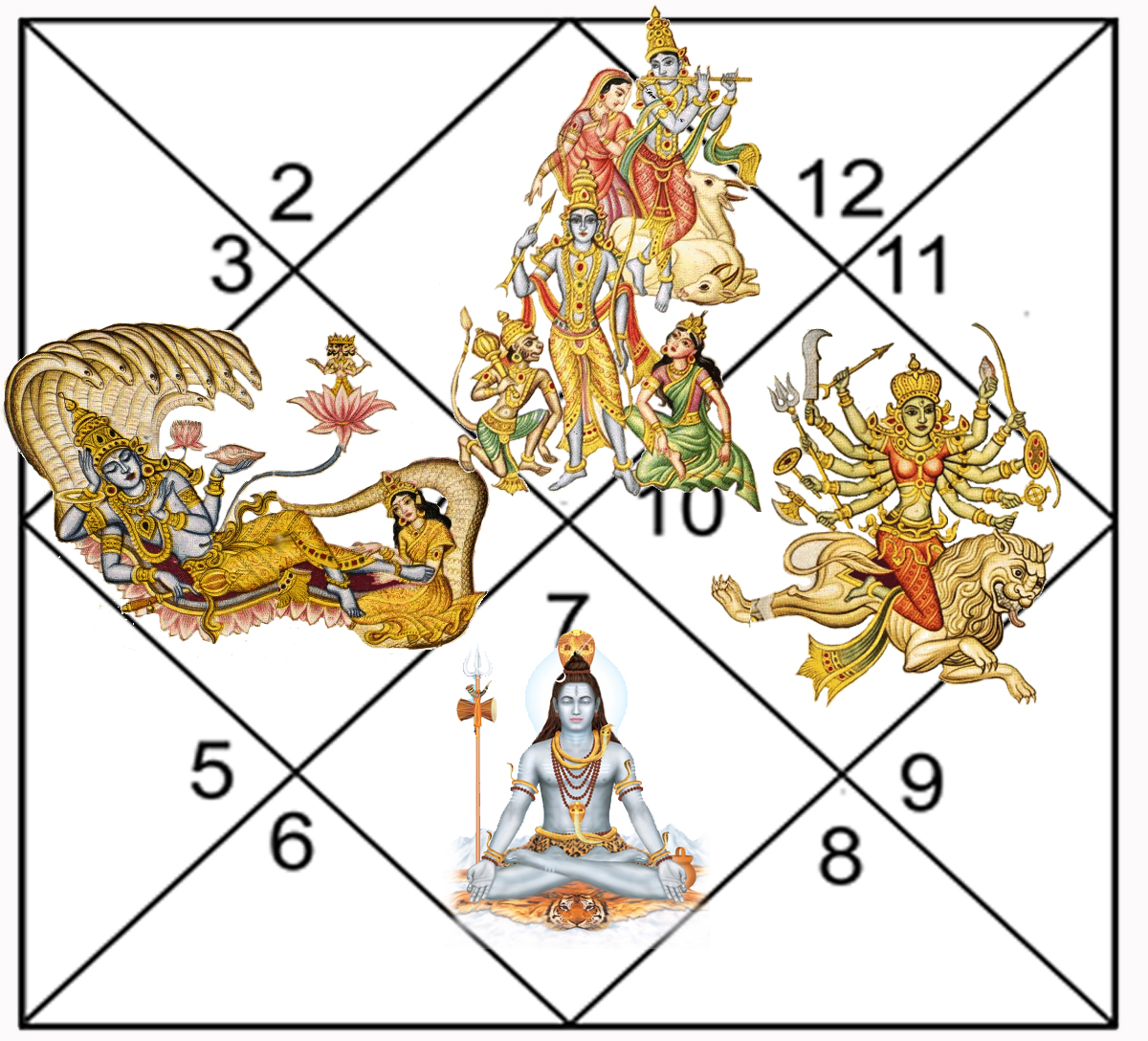
When we review this concept, we realize that the one variable which converted a static, dead rāśi chakra into a living dynamic karma-kṣetra, was the lagna (ascendant). Therefore the lagna is the one which represents the power of God and is praise-worthy. What do people do when the king enters? They ‘stand up’ in respect. The highest praise is said to be the ‘standing ovation’. Therefore, the posture associated with the lagna is always one of standing. When a planet is in lagna, it deserves a standing ovation, high praise.
The house opposite is the 7th house where the posture is the opposite i.e. sitting. The 4th is the nadir showing the lest energy and posture is ‘sleeping’ or lying down. The posture associated with the 10th house is the opposite the 4th house and indicates high energy and activity. This is the walking or running posture.